Scrabble, Boggle, Hangman, and online word puzzles may feel like simple entertainment—but beneath the surface, they’re powerful tools for building vocabulary and boosting brain development.
Vocabulary games aren’t just fun—they’re backed by cognitive science. When we engage with words through play, we activate memory, pattern recognition, and deeper language processing. For learners of all ages, this means word games offer a low-pressure, high-impact way to improve vocabulary naturally.

Let’s explore the science behind vocabulary play and why it deserves a place in every learning environment.
Why Vocabulary Play Works: The Brain Science
Research in educational psychology and neuroscience shows that playful learning creates ideal conditions for memory and comprehension. Here’s how vocabulary games support cognitive development:
Active Recall
Games often require players to retrieve words from memory—an essential component of vocabulary retention. This strengthens neural connections far more than passive review.

Spaced Repetition
When games are played frequently, they naturally space out practice, which supports long-term memory consolidation—especially when words are encountered across different contexts.
Emotional Engagement
Laughter, excitement, and even a little competition trigger emotional responses. Emotions help anchor memory, making the words we encounter during play easier to recall later.
Multisensory Stimulation
Word games often involve speaking, listening, seeing, and moving—engaging multiple senses to reinforce language learning in a holistic way.
Boost student vocabulary, spelling, and literacy with Wordela!
Boost vocabulary, strengthen reading skills, and study smarter with a platform designed to keep learners engaged and growing—wherever they are.



How Word Games Support Learning in Classrooms and at Home
Vocabulary games are highly adaptable. They can be quick brain breaks, full-length activities, or even part of an assessment. Some proven benefits include:
- Improved reading fluency and comprehension
- Expanded word choice in writing
- Stronger spelling and phonics awareness
- Increased confidence in speaking and listening activities
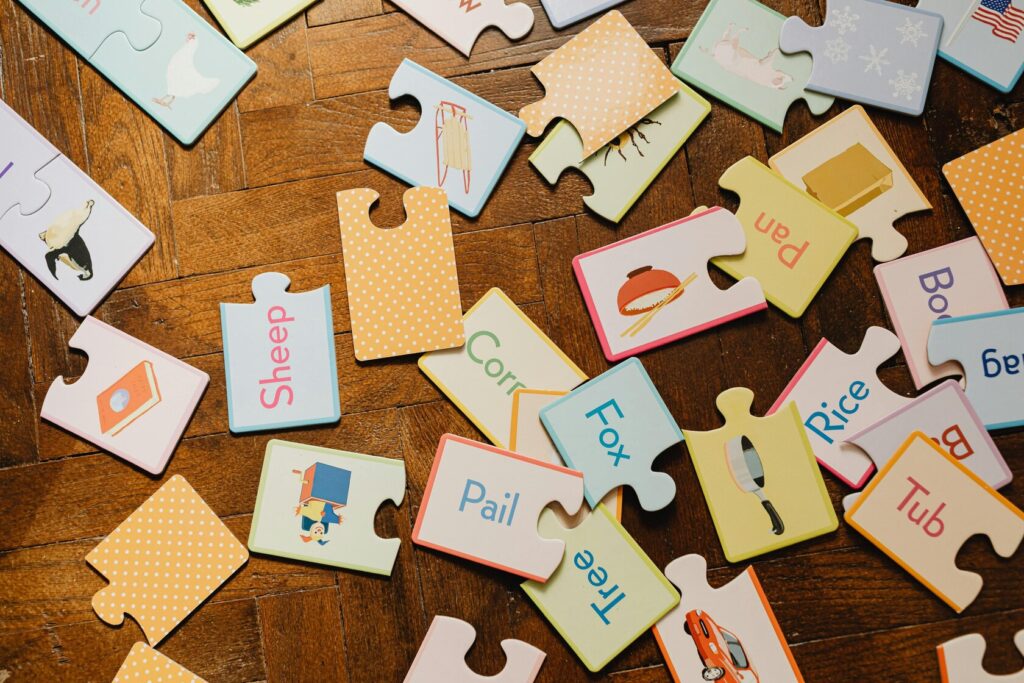
Games can be particularly powerful for students with learning differences, like dyslexia or ADHD, because they offer structured repetition in a stress-free format.
Examples of Effective Vocabulary Games
Here are a few popular types of word games—and what they support:
- Anagram games (like Boggle or Wordscapes): Promote spelling, pattern recognition, and flexible thinking
- Synonym/Antonym match-ups: Reinforce word meaning and depth
- Pictionary with vocabulary words: Encourages creative thinking and multimodal connections
- Charades or Guess the Word: Boost oral communication and active recall
- Online adaptive tools: Platforms like Wordela combine game-like features with smart review systems, helping learners build vocabulary efficiently and enjoyably
Making Vocabulary Play a Habit
The key to vocabulary growth isn’t just repetition—it’s meaningful repetition. When learners revisit words in varied, joyful ways, they’re far more likely to retain and use them. Word games offer just that: variety, joy, and lasting learning.
From classrooms to kitchen tables, word play transforms vocabulary from a task into a treat.
Not on Wordela Yet? You're Missing Out!
Students master vocabulary, sharpen reading skills, and supercharge learning with Wordela—the smart platform for adaptive, engaging language development. Whether you’re a student, a homeschooler, or leading a classroom, Wordela has the perfect path to help you succeed!
Choose Your Ideal Experience: